
Understanding Activity 12: The Walking Descriptors
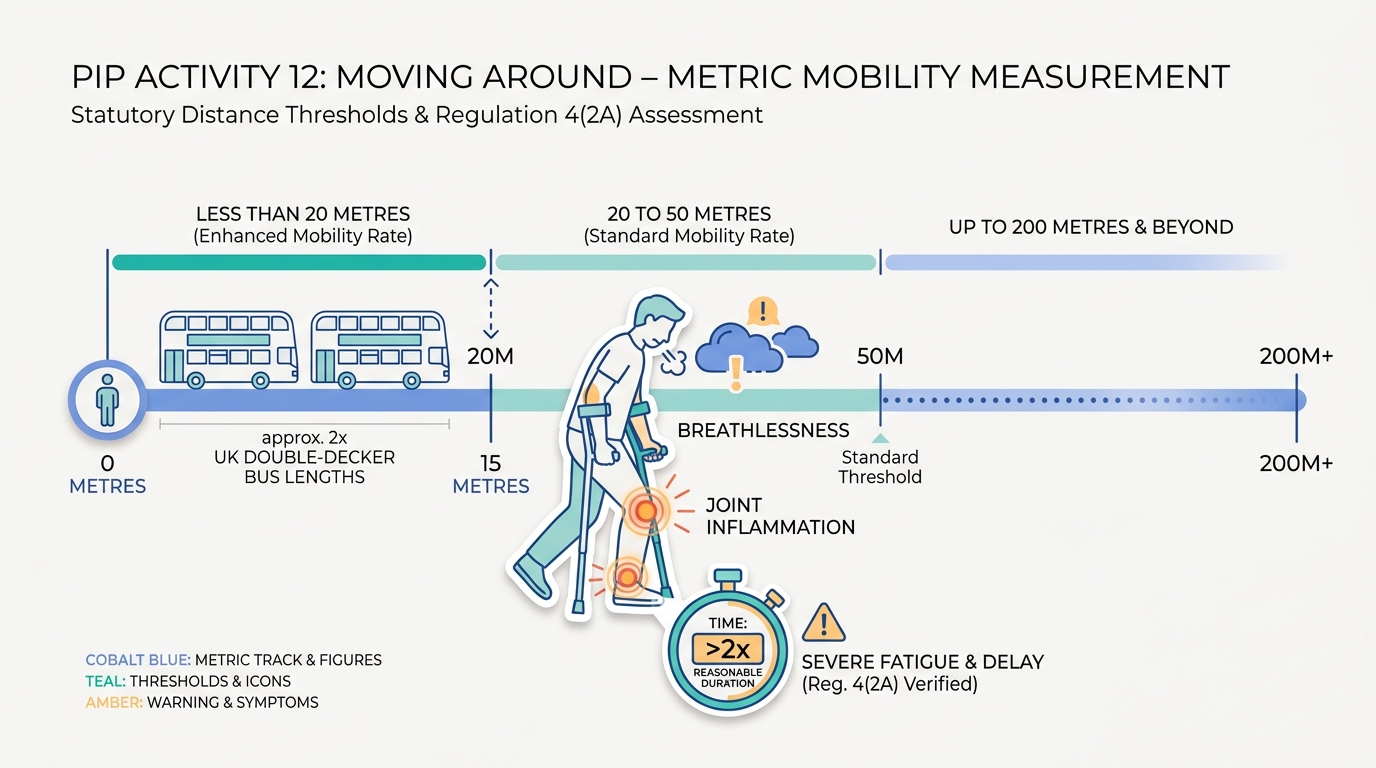
Mobility Activity 2 ("Moving around") carries the highest stakes in the PIP tariff. Walking less than 20 metres awards 12 points—automatically unlocking the Enhanced Rate of Mobility (£75.75 per week).
However, assessors frequently deploy "The 20-Metre Trap" to claim that because a claimant walked from a waiting room to an examination room, they can mobilise 50 to 200 metres unaided.
What You'll Learn in This Guide:
- What actually happens during a Personal Independence Payment (PIP) functional assessment.
- How to prepare for telephone, video, and face-to-face consultations.
- How to explain your needs accurately without downplaying your daily challenges.
- Key regulations like the statutory S.A.R.R. criteria (Regulation 4(2A)) that assessors use.
If you've applied for PIP, the next major step is the consultation or assessment. This is carried out by an independent healthcare provider on behalf of the Department for Work and Pensions (DWP). Here is how to prepare effectively for your assessment.
What is the PIP Assessment?
The assessment is an interview conducted by a qualified health professional (like a nurse, paramedic, occupational therapist, or physiotherapist). They will review the information you provided in your form and ask questions about your daily life.
The assessment is NOT a medical examination. Rather, it is a functional assessment to see what you can and cannot do.
Types of Assessments
Assessments can take place:
- Face-to-face at an assessment centre.
- By telephone (very common).
- By video call.
Key Strategies for Success
1. Be Honest and Authentic
Do not exaggerate your condition, but do not downplay it either. Many people naturally try to put a brave face on their challenges. In a PIP assessment, this can result in a lower award or denial of benefits. Explain your worst days and how you cope.
2. Focus on the S.A.R.R. Criteria (Regulation 4(2A))
Under DWP Regulation 4(2A), you are only considered able to complete an activity if you can do it:
- Safely: In a manner unlikely to cause harm, pain, or risk to you or another person.
- Acceptably: To an acceptable standard of hygiene and safety.
- Repeatedly: As often as the activity is reasonably required throughout the day.
- In a Reasonable timeframe: Taking no more than twice the maximum time a person without your condition would take.
If you can prepare a meal but it leaves you too exhausted to eat it or clean up, or if you cannot do it again for the rest of the day, explain this!
3. Have Your Form Handy
If your assessment is by phone or video, have a copy of your "How your disability affects you" form in front of you. This will help you refer back to your original answers and stay consistent.
4. Bring a Companion
You are allowed to have someone with you during the assessment (a family member, friend, or support worker). They can take notes, remind you of things you might forget to mention, and provide moral support. They can also speak on your behalf if necessary.
5. Document the Impact, Not Just the Diagnosis
The DWP does not award PIP based on what condition you have, but on how it affects your ability to function. For example, instead of just saying "I have arthritis," explain: "Because of my arthritis, I cannot grip pans or peel vegetables, so I cannot cook safely without help."
What happens after the assessment?
The assessor will write a report and send it to a DWP decision maker, who will make the final decision. You will receive a decision letter within a few weeks. If you disagree with the decision, you have the right to challenge it via Mandatory Reconsideration.
Next Steps
To practise your responses and build your confidence before the consultation, try our interactive Assessment Hub.