
PIP Activity 11: Planning and Following Journeys (4, 8, 10 and 12 points)

Key points
- Activity 11 is the first of the two PIP Mobility activities and assesses cognitive, sensory, neurodivergent, and mental health barriers to planning and following routes outside the home.
- Scoring 8 or 10 points (Descriptors 11c, 11d, or 11e) qualifies for the Standard Mobility rate (£30.30/week in 2026/27), while scoring 12 points (Descriptor 11f) qualifies for the Enhanced Mobility rate (£80.00/week).
- The key difference between 11d (10 points) and 11f (12 points) is whether you need another person, assistance dog, or specialist orientation aid only on unfamiliar journeys (11d) or even on familiar local journeys (11f).
- Under Regulation 4(2A), following a route only counts if you can do so safely, to an acceptable standard, repeatedly, and within a reasonable time.
View visual diagram: The 4 Regulation 4(2A) tests & the 50% rule▼
The 4 reliability tests for every PIP activity
In law, if you cannot do a task safely, to an acceptable standard, repeatedly and in a reasonable time, the DWP must treat you as needing help.
Without risk of falls, burns, cuts or harm to yourself or others.
Completed properly without severe pain, breathlessness or distress.
Able to repeat the task as often as needed across the day without exhaustion.
Taking no more than twice as long as someone without your condition.
Good days do not cancel out your points
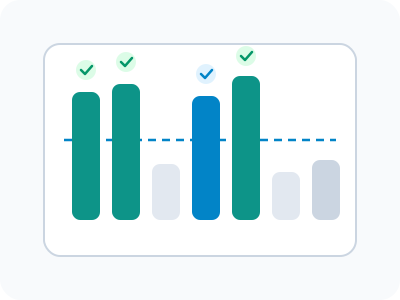
If a difficulty affects you on more than half of days (at least 4 days a week, or 183 days a year), that descriptor applies to your claim.
1. What Activity 11 (Planning and following journeys) assesses
Activity 11 is part of the PIP Mobility component. While Activity 12 looks at physical walking distance, Activity 11 looks at your ability to plan the route of a journey in advance and navigate and follow a route safely outside the home when affected by mental health, cognitive, sensory, or neurodivergent conditions.
What counts as a journey?
- Leaving home to go to a local shop, GP surgery, pharmacy, workplace, or unfamiliar venue, either on foot or using public transport.
- Dealing with unexpected changes on the route, such as roadworks, bus diversions, crowded pavements, loud traffic, or cancelled trains.
- Note that using a normal smartphone map app or car sat-nav does not count as a specialist "orientation aid" under Descriptors 11d or 11f (an orientation aid means a specialist device such as a long cane or tactile navigation device for visual impairment).
Because there are only two Mobility activities (Activity 11 and Activity 12), scoring 8 or 10 points on Activity 11 alone is enough to qualify for the Standard Mobility rate (£30.30/week), and scoring 12 points on Descriptor 11f alone qualifies for the Enhanced Mobility rate (£80.00/week).
2. All 6 PIP Planning and Following Journeys Descriptors (11a to 11f) & Points
Below is the complete points table for Activity 11 under Part 3 of Schedule 1 of the PIP Regulations:
| Descriptor | Statutory wording | PIP points |
|---|---|---|
| 11a | Can plan and follow the route of a journey unaided | 0 points |
| 11b | Needs prompting to be able to undertake any journey to avoid overwhelming psychological distress to the claimant | 4 points |
| 11c | Cannot plan the route of a journey | 8 points |
| 11d | Cannot follow the route of an unfamiliar journey without another person, assistance dog, or orientation aid | 10 points |
| 11e | Cannot undertake any journey because it would cause overwhelming psychological distress to the claimant | 10 points |
| 11f | Cannot follow the route of a familiar journey without another person, assistance dog, or orientation aid | 12 points |
Descriptor 11a: Can plan and follow the route of a journey unaided (0 points)
- You can plan routes and travel to both familiar and unfamiliar places alone without prompting, supervision, or overwhelming psychological distress.
Descriptor 11b: Needs prompting to undertake any journey to avoid overwhelming psychological distress (4 points)
- You suffer acute anxiety or distress about going out, but reassurance and prompting from another person enables you to leave the house and complete the journey yourself.
Descriptor 11c: Cannot plan the route of a journey (8 points - Standard Mobility)
- Cognitive impairment, learning disability, dementia, brain injury, or severe executive dysfunction means you cannot work out a route in advance or re-plan if a route is blocked, even if you could physically walk it.
Descriptor 11d: Cannot follow the route of an unfamiliar journey without another person, assistance dog, or orientation aid (10 points - Standard Mobility)
- You can manage a well-known local route (such as the corner shop), but on any unfamiliar journey (such as a hospital clinic, new town centre, or unfamiliar bus route), visual impairment, cognitive disorientation, autism, sensory overload, or severe panic / overwhelming psychological distress means you cannot navigate safely without another person accompanying you.
Descriptor 11e: Cannot undertake any journey because it would cause overwhelming psychological distress (10 points - Standard Mobility)
- Agoraphobia, severe panic disorder, PTSD, or psychosis is so severe that leaving home to undertake any outdoor journey causes overwhelming psychological distress, so you remain confined to your home on most days.
Descriptor 11f: Cannot follow the route of a familiar journey without another person, assistance dog, or orientation aid (12 points - Enhanced Mobility)
- Even on familiar local routes that you have travelled many times before, sight loss, dementia, cognitive impairment, epilepsy, or overwhelming psychological distress / sensory overload means you become disoriented, unsafe near traffic, or unable to complete the route unless another person walks or travels with you from door to door.
3. The Key Difference Between 11b (4 pts), 11d/11e (10 pts), and 11f (12 pts)
Assessors often award 11b (4 points) instead of 11d (10 points) or 11f (12 points). Make sure your PIP2 answer or Mandatory Reconsideration explains which situation matches your daily life:
- Why 11b (4 points) is not enough if someone has to go with you: Descriptor 11b only applies if verbal prompting before or during the trip is enough for you to complete the journey. If prompting alone does not stop panic, disorientation, or unsafe road crossing and another person must physically accompany you to guide and keep you safe, point to 11d (10 points) or 11f (12 points).
- 11d (10 points) vs 11f (12 points) - Unfamiliar vs Familiar:
- If you can walk to your local chemist or GP surgery alone on most days, but need someone with you whenever you travel somewhere new or handle route changes, Descriptor 11d (10 points) applies.
- If you cannot even follow familiar local routes alone on more than 50% of days because sensory overload, panic attacks, dissociation, visual impairment, or confusion makes you lose your way or step into traffic without another person guiding you, Descriptor 11f (12 points) applies.
- 11e (10 points) vs 11f (12 points):
- Descriptor 11e (10 points) applies when overwhelming psychological distress stops you undertaking journeys at all (you stay indoors).
- Descriptor 11f (12 points) applies when you do undertake familiar journeys, but can only follow the route safely if another person (or assistance dog / specialist orientation aid) is with you throughout.
Following the three-judge Upper Tribunal decision in MH v Secretary of State for Work and Pensions ([2016] UKUT 531 (AAC)), overwhelming psychological distress that prevents you navigating a route safely without another person accompanying you can qualify under Descriptors 11d (10 points) and 11f (12 points).
4. Worked Regulation 4(2A) Examples for Activity 11
When writing your answer for Activity 11, show how Regulation 4(2A) applies when you try to travel outside:
- Safely: Do panic attacks, dizziness, visual loss, or sensory overload make you unaware of oncoming traffic at road crossings, or have you ever frozen in the street or wandered into an unsafe area?
- To an acceptable standard: Do you have to abandon trips halfway through and return home distressed if a bus is diverted or a street is noisy?
- Repeatedly & 50% rule (Regulation 7): Managing a single short journey on a rare calm day does not mean you can do so on more than 50% of days across the year.
- Within a reasonable time: Does severe anxiety or disorientation cause you to stop repeatedly or take long detours that more than double the normal journey time?
MyPIPApp is an independent self-help tool and is not part of the DWP. Saving drafts here does not send anything to the DWP. To contact the DWP PIP enquiry line about your claim, call 0800 121 4433 (textphone 0800 121 4493).
Free Starter (£0) - one-off stage packs available
Check your estimated PIP points for free
Before you send your paperwork, use our free calculator to check your estimated score across all 12 PIP activities under the four Regulation 4(2A) tests: safely, to an acceptable standard, repeatedly and in a reasonable time.
Frequently asked questions
Does driving an automatic car mean I automatically get 0 points on Activity 11?
Assessors often assume that if you can drive a car, you can plan and follow journeys unaided. If you can only drive a short familiar route when someone else is in the passenger seat to navigate, calm panic, or handle diversions, or if you cannot use public transport or walk unfamiliar routes alone, explain those exact limits under Regulation 4(2A).
Does using Google Maps on my phone count as an orientation aid for 10 or 12 points?
No. Under DWP guidance and tribunal case law, an 'orientation aid' means a specialist aid designed for disabled people (such as a long cane for visual impairment), not a standard consumer smartphone or sat-nav.
Can I get both Activity 11 points and Activity 12 points for the Mobility component?
Yes. Any points you score in Activity 11 (Planning and following journeys) and Activity 12 (Moving around) are added together towards your total Mobility score (8 points for Standard Rate £30.30/week, or 12 points for Enhanced Rate £80.00/week).
Related guides and articles
DWP independence notice: MyPIPApp is an independent self-help tool and is not part of, or endorsed by, the Department for Work and Pensions (DWP) or HMCTS. Actions taken in MyPIPApp update your own claim drafts only and do not notify government systems. To contact the DWP directly about your claim or PA4 report, call 0800 121 4433 (textphone 0800 121 4493).