
PIP Activity 9: Engaging with Other People Face to Face (2, 4 and 8 points)

Key points
- Activity 9 looks at your ability to engage socially with other people face to face in a contextually and socially appropriate manner, understand body language, and establish relationships.
- Descriptor 9b (2 points) applies if you need prompting to engage, while Descriptor 9c (4 points) applies if you need 'social support' from someone experienced in helping you engage (including a family member, partner, or close friend).
- Descriptor 9d (8 points) applies if engaging face to face causes overwhelming psychological distress or a risk of harm to yourself or others.
- Speaking politely to one health professional during a telephone or video assessment does not prove you can engage with unfamiliar people face to face reliably under Regulation 4(2A).
View visual diagram: The 4 Regulation 4(2A) tests & the 50% rule▼
The 4 reliability tests for every PIP activity
In law, if you cannot do a task safely, to an acceptable standard, repeatedly and in a reasonable time, the DWP must treat you as needing help.
Without risk of falls, burns, cuts or harm to yourself or others.
Completed properly without severe pain, breathlessness or distress.
Able to repeat the task as often as needed across the day without exhaustion.
Taking no more than twice as long as someone without your condition.
Good days do not cancel out your points
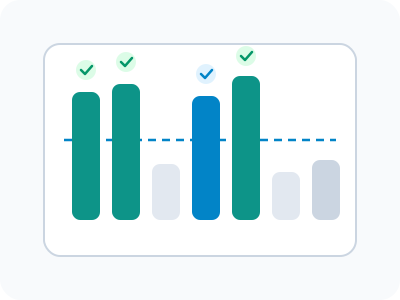
If a difficulty affects you on more than half of days (at least 4 days a week, or 183 days a year), that descriptor applies to your claim.
1. What Activity 9 (Engaging with other people face to face) measures
Activity 9 of the PIP Daily Living component assesses your ability to interact face to face with other people in a socially and contextually appropriate way, read social cues and body language, and build basic everyday relationships.
Activity 9 vs Activity 7 (Communicating verbally)
Claimants often mix up Activity 7 and Activity 9:
- Activity 7 (Communicating verbally): Looks at physical speech and hearing mechanics (speaking, hearing, and understanding simple or complex spoken sentences).
- Activity 9 (Engaging with other people face to face): Looks at psychological, cognitive, neurodivergent, and emotional barriers to interacting with people face to face (such as severe anxiety, panic attacks, autism, ADHD, PTSD, psychosis, or depression).
Under PIPAG Part 2, Activity 9 tests whether you can engage face to face with people generally, not just your closest relative or carer at home. Being able to speak to one trusted family member does not mean you score 0 points.
2. All 4 PIP Engaging with Other People Descriptors (9a to 9d) & Points
Here is the complete breakdown of the four statutory descriptors for Activity 9:
| Descriptor | Statutory wording | PIP points |
|---|---|---|
| 9a | Can engage with other people unaided | 0 points |
| 9b | Needs prompting to be able to engage with other people | 2 points |
| 9c | Needs social support to be able to engage with other people | 4 points |
| 9d | Cannot engage with other people due to such engagement causing either: (i) overwhelming psychological distress to the claimant; or (ii) the claimant to exhibit behaviour which would result in a substantial risk of harm to the claimant or another person | 8 points |
Descriptor 9a: Can engage with other people unaided (0 points)
- You can interact face to face with both familiar and unfamiliar people safely, appropriately, and without prompting, social support, or overwhelming distress.
Descriptor 9b: Needs prompting to be able to engage with other people (2 points)
- You can interact once you are in a conversation, but you need another person to remind, encourage, or coax you before or during the interaction because social anxiety, depression, or low confidence makes you withdraw or stay silent.
Descriptor 9c: Needs social support to be able to engage with other people (4 points)
Why Descriptor 9c (4 points) is so important:
- Under Schedule 1 of the PIP Regulations, social support means support from a person trained or experienced in assisting you to engage in social situations.
- As confirmed by the UK Supreme Court in Secretary of State for Work and Pensions v MM ([2019] UKSC 42), social support does not have to come from a paid support worker or health professional.
- It can come from a partner, parent, relative, or close friend who knows your condition, recognises your early signs of panic, sensory overload, or shutdown, steps in to speak for you when you freeze, and helps you stay calm enough to complete the face-to-face interaction.
Descriptor 9d: Cannot engage due to overwhelming psychological distress or risk of harm (8 points)
- Even with prompting or support, face-to-face interaction with unfamiliar people triggers overwhelming psychological distress (such as severe panic attacks, dissociation, autistic shutdown/meltdown, or PTSD flashbacks) so that you avoid face-to-face contact altogether, or causes behaviour that creates a real risk of harm to yourself or others.
3. How Assessors Test Activity 9 (and How to Challenge Snapshot Notes)
In PA4 assessment reports, assessors frequently write: "Engaged well during the telephone consultation, answered questions without prompting, and had normal tone of voice. Awarded 9a (0 points)."
If you are filling in your PIP2 form or challenging a PA4 report, explain why a consultation does not reflect everyday face-to-face engagement under Regulation 4(2A):
- Telephone vs face-to-face: Answering structured clinical questions on the telephone from your own bedroom is not face-to-face social engagement in the real world.
- Hidden support during the call: If a partner, family member, or friend was sitting next to you holding your hand, mouthing prompts, or calming you down during the assessment, state that clearly.
- After-effects and Regulation 4(2A) repeatability: If getting through a 45-minute appointment left you shaking, crying, nauseous, or exhausted in bed for the rest of the day, you cannot engage repeatedly or to an acceptable standard under Regulation 4(2A).
- The 50% rule (Regulation 7): Explain what happens on more than half the days of the year when you have to speak to delivery drivers, receptionists, shop staff, or clinicians face to face.
If a family member or partner must accompany you to appointments because they know your triggers, answer questions when you freeze or shut down, and step in when you become distressed, describe their active experience of supporting you so the decision maker considers Descriptor 9c (4 points) rather than only 9b (2 points).
4. Worked Example Answers for Anxiety, Autism, ADHD & PTSD
Use these structured examples to see how symptoms, support, and Regulation 4(2A) connect:
- Autism / sensory processing & social support (Descriptor 9c - 4 points): "When speaking face to face with people I do not know well, I struggle to process facial expressions, tone of voice, and background noise at the same time, causing sensory overload and verbal shutdown. I cannot attend GP appointments or face-to-face meetings unless my partner comes with me. Because my partner knows my communication needs and triggers, they rephrase questions into literal steps, speak on my behalf when I freeze, and guide me somewhere quiet if I begin to shut down. Under Regulation 4(2A), I cannot engage face to face to an acceptable standard or safely without this experienced social support."
- Severe social anxiety / PTSD & overwhelming distress (Descriptor 9d - 8 points): "Due to PTSD and severe panic disorder, face-to-face contact with unfamiliar people causes overwhelming psychological distress, including hyperventilation, shaking, sweating, and dissociation. I do not answer the front door, use telephone or online repeat prescriptions instead of visiting the pharmacy, and cannot engage face to face even if a relative is present. Under Regulation 4(2A) and Regulation 7, this prevents face-to-face engagement on more than 50% of days."
MyPIPApp is independent and not linked to the DWP or HMCTS. Saving notes here updates your private drafts only. To contact the DWP PIP enquiry line directly, call 0800 121 4433 (textphone 0800 121 4493).
Free Starter (£0) - one-off stage packs available
Check your estimated PIP points for free
Before you send your paperwork, use our free calculator to check your estimated score across all 12 PIP activities under the four Regulation 4(2A) tests: safely, to an acceptable standard, repeatedly and in a reasonable time.
Frequently asked questions
Does 'social support' under Descriptor 9c (4 points) require a professional support worker?
No. Under Schedule 1 of the PIP Regulations and the Supreme Court ruling in MM ([2019] UKSC 42), social support can be provided by a family member, partner, or close friend who is experienced in understanding your condition and helping you manage face-to-face social interactions.
Can I get points for Activity 9 if I can talk to my close family at home?
Yes. Activity 9 assesses your ability to engage face to face with people generally, including unfamiliar people in everyday settings, not just one or two trusted relatives at home.
What if the assessor gave me 0 points because I spoke on the phone during my assessment?
Point out in your Mandatory Reconsideration that Activity 9 specifically tests face-to-face engagement, and explain any panic, prompting, family support, or prolonged recovery you experienced during and after the call under Regulation 4(2A).
Related guides and articles
DWP independence notice: MyPIPApp is an independent self-help tool and is not part of, or endorsed by, the Department for Work and Pensions (DWP) or HMCTS. Actions taken in MyPIPApp update your own claim drafts only and do not notify government systems. To contact the DWP directly about your claim or PA4 report, call 0800 121 4433 (textphone 0800 121 4493).