
PIP Activity 3: Managing therapy or monitoring a health condition (points and examples)

Key points

- Under the PIP Regulations, using a dosette box, pill alarm, or needing prompting/help to take medication or monitor a health condition scores 1 point (Descriptor 3b).
- That single point under 3b often makes the difference between 7 points (no award) and 8 points (Standard Daily Living, £76.70/week in 2026/27), or between 11 points and 12 points (Enhanced Daily Living, £114.60/week).
- Higher scores of 2, 4, 6, or 8 points (Descriptors 3c to 3f) apply when another person supervises, prompts, or physically helps you carry out prescribed home therapy, counted by the weekly hours of support.
- Under Regulation 4(2A), managing medication or therapy only counts as unaided if you can do it safely (without accidental overdose or missed doses), to an acceptable standard, repeatedly, and within a reasonable time.
View visual diagram: The 4 Regulation 4(2A) tests & the 50% rule▼
The 4 reliability tests for every PIP activity
In law, if you cannot do a task safely, to an acceptable standard, repeatedly and in a reasonable time, the DWP must treat you as needing help.
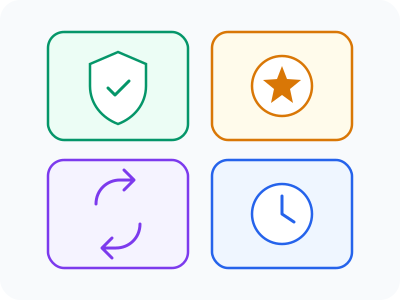
Without risk of falls, burns, cuts or harm to yourself or others.
Completed properly without severe pain, breathlessness or distress.
Able to repeat the task as often as needed across the day without exhaustion.
Taking no more than twice as long as someone without your condition.
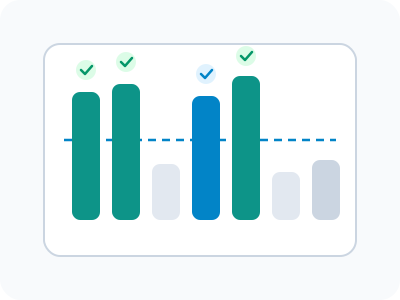
Good days do not cancel out your points
If a difficulty affects you on more than half of days (at least 4 days a week, or 183 days a year), that descriptor applies to your claim.
- 1.The Rule Every Claimant Should Know: Medication (1 pt) vs Home Therapy (2 to 8 pts)
- 2.All 6 PIP Managing Therapy Descriptors (3a to 3f) & Points
- 3.Applying Regulation 4(2A) Safety & Repeatability to Activity 3
- 4.Worked Example Answers for Descriptor 3b (1 pt) & Home Therapy (3c to 3f)
- •Frequently asked questions
1. The Rule Every Claimant Should Know: Medication (1 pt) vs Home Therapy (2 to 8 pts)
Activity 3 has strict statutory definitions under Part 2 of Schedule 1 of the PIP Regulations (as amended in March 2017). Understanding the difference between medication, monitoring, and therapy stops confusion when reading your decision letter:
- Managing medication (max 1 point under 3b): Taking prescribed tablets, inhalers, eye drops, injections, or applying standard prescription creams at home. Whether you use a dosette box, phone alarms, or need someone to remind you or hand you tablets to prevent overdose, medication management scores 1 point (Descriptor 3b).
- Monitoring a health condition (max 1 point under 3b): Needing another person to supervise, prompt, or help you check blood glucose levels, blood pressure, peak flow, seizure warning signs, or severe mental health relapse indicators also scores 1 point (Descriptor 3b).
- Managing therapy at home (2 to 8 points under 3c to 3f): Therapy means non-medication treatment carried out at home that is recommended or prescribed by a registered health professional (such as home physiotherapy exercises, nebuliser or airway clearance therapy, home haemodialysis, TENS / rehabilitation regimens, complex wound or dermatology bandaging, or structured home psychological therapy). If another person must supervise, prompt, or physically assist you with that home therapy, points rise from 2 points up to 8 points based on how many hours per week their help takes.
Most other Daily Living descriptors go up in even numbers (2, 4, 8 points), while Activity 4e scores 3 points. Scoring 1 point on Descriptor 3b frequently bridges 7 points up to 8 points (Standard rate) or 11 points up to 12 points (Enhanced rate).
2. All 6 PIP Managing Therapy Descriptors (3a to 3f) & Points
Here are all six statutory descriptors for Activity 3 under Schedule 1 of the PIP Regulations:
| Descriptor | Statutory wording | PIP points |
|---|---|---|
| 3a | Either: (i) does not receive medication or therapy or need to monitor a health condition; or (ii) can manage medication or therapy or monitor a health condition unaided | 0 points |
| 3b | Needs any one or more of the following: (i) to use an aid or appliance to be able to manage medication; (ii) supervision, prompting or assistance to be able to manage medication; or (iii) supervision, prompting or assistance to be able to monitor a health condition | 1 point |
| 3c | Needs supervision, prompting or assistance to be able to manage therapy that takes no more than 3.5 hours a week | 2 points |
| 3d | Needs supervision, prompting or assistance to be able to manage therapy that takes more than 3.5 but no more than 7 hours a week | 4 points |
| 3e | Needs supervision, prompting or assistance to be able to manage therapy that takes more than 7 but no more than 14 hours a week | 6 points |
| 3f | Needs supervision, prompting or assistance to be able to manage therapy that takes more than 14 hours a week | 8 points |
How weekly hours are counted for Descriptors 3c to 3f
- Only therapy carried out at home counts (travelling to hospital clinics or outpatient appointments does not count towards the weekly hours).
- Importantly, the time thresholds (
up to 3.5 hours,3.5 to 7 hours,7 to 14 hours,more than 14 hours) measure the time another person needs to spend supervising, prompting, or physically assisting you with the home therapy across a week:- 30 minutes a day of hands-on help or supervision with daily physiotherapy, nebulisers, or skin/wound therapy = 3.5 hours a week (border of 3c / 3d; over 30 mins daily = 4 points under 3d).
- Over 1 hour a day of supervised or assisted home therapy = more than 7 hours a week (6 points under 3e).
- Over 2 hours a day (for example, assisted home haemodialysis or intensive daily airway clearance and rehabilitation) = more than 14 hours a week (8 points under 3f).
3. Applying Regulation 4(2A) Safety & Repeatability to Activity 3
When filling in Question 3 of your PIP2 or AR1 form, explain why you cannot manage your medication, monitoring, or home therapy reliably on your own under Regulation 4(2A):
- Safely (overdose, missed doses, and self-harm risk):
- Does brain fog, memory loss, ADHD, dementia, or fatigue cause you to forget whether you already took painkillers or insulin and risk taking a double dose?
- Does a partner or family member keep your medication locked away and hand out each dose because of past overdose risk or severe distress?
- Do arthritic hands make pushing small tablets out of foil blister packs impossible without a pill-popper tool or pharmacy-filled dosette box?
- To an acceptable standard & repeatedly:
- If you take medications four times a day, managing your morning tablets once does not mean you manage evening doses reliably when fatigue sets in.
- For home therapy (such as physiotherapy stretches, chest clearance, or medical dressings), explain why you cannot perform the exercises safely or reach the affected area without another person's hands-on help or supervision.
4. Worked Example Answers for Descriptor 3b (1 pt) & Home Therapy (3c to 3f)
Compare how to write a clear answer for medication/monitoring vs supervised home therapy:
- Medication aids & prompting (Descriptor 3b - 1 point): "Due to fibromyalgia brain fog and rheumatoid arthritis in my fingers, I cannot safely open standard foil blister packs or remember whether I have already taken my four daily prescription medications. Twice in the past year I accidentally double-dosed on strong pain medication and became unwell. I now use a pharmacy-prepared weekly dosette box and need my partner to prompt me each morning and evening to check the compartment has been taken safely under Regulation 4(2A)."
- Assisted home therapy (Descriptor 3d - 4 points): "Following my respiratory consultant's care plan, I must complete nebuliser treatment and chest physiotherapy airway-clearance techniques at home twice every day. Because of severe breathlessness, shoulder weakness, and dizziness, my partner has to set up and clean the nebuliser mask and physically assist with percussion and positioning for 30 to 35 minutes every morning and 30 minutes every evening (around 7 hours per week in total). Under Regulation 4(2A), I cannot complete this prescribed home therapy safely or to an acceptable standard without their daily assistance."
MyPIPApp is independent and not affiliated with the DWP or NHS. Saving your drafts here does not notify the DWP. To speak to the DWP PIP enquiry line, call 0800 121 4433 (textphone 0800 121 4493).
Free Starter (£0) - one-off stage packs available
Check your estimated PIP points for free
Before you send your paperwork, use our free calculator to check your estimated score across all 12 PIP activities under the four Regulation 4(2A) tests: safely, to an acceptable standard, repeatedly and in a reasonable time.
Frequently asked questions
Why did I only get 1 point on Activity 3 when my partner manages all my tablets?
Under the PIP Regulations (amended in 2017), needing an aid (like a dosette box) or needing supervision, prompting, or physical help from another person to take medication or monitor a health condition is capped at 1 point under Descriptor 3b. Points of 2 to 8 (Descriptors 3c to 3f) only apply to help with prescribed non-medication home therapy.
Does a smartphone medication alarm count as an aid under Descriptor 3b?
Assessors sometimes argue that a standard phone alarm is something anyone might use, whereas a physical dosette box, Nomad blister tray, pill cutter, inhaler spacer, or braille/talking label is readily accepted as a medication aid. If you also need another person to remind, check, or prompt you because you snooze or miss alarms due to brain fog or depression, explain that human prompting clearly.
Do hospital physiotherapy or counselling appointments count towards the weekly therapy hours?
No. Under PIP guidance and case law, Activity 3 only counts therapy carried out at home (for example, daily physiotherapy exercises, nebulisers, home dialysis, or structured home rehabilitation prescribed by a clinician), and measures the hours per week another person spends supervising, prompting, or assisting you at home.
Related guides and articles
DWP independence notice: MyPIPApp is an independent self-help tool and is not part of, or endorsed by, the Department for Work and Pensions (DWP) or HMCTS. Actions taken in MyPIPApp update your own claim drafts only and do not notify government systems. To contact the DWP directly about your claim or PA4 report, call 0800 121 4433 (textphone 0800 121 4493).