
PIP Activity 10: Making budgeting decisions (2, 4 and 6 points examples)

Key points
- Activity 10 assesses your cognitive, intellectual, and mental health capacity to make everyday and household financial decisions.
- Needing prompting or assistance with 'complex budgeting decisions' (calculating household budgets, managing and paying bills, and planning future purchases) scores 2 points (Descriptor 10b).
- Needing prompting or assistance with 'simple budgeting decisions' (working out the cost of goods and checking change in a shop) scores 4 points (Descriptor 10c).
- Being unable to make any budgeting decisions at all (requiring a DWP appointee, deputy, or attorney to manage all money) scores 6 points (Descriptor 10d).
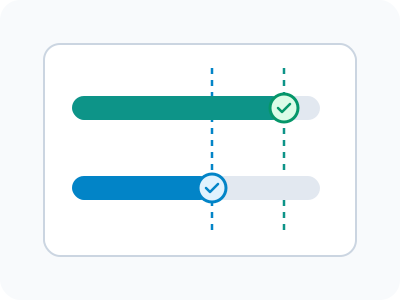
View visual diagram: The 4 Regulation 4(2A) tests & the 50% rule▼
The 4 reliability tests for every PIP activity
In law, if you cannot do a task safely, to an acceptable standard, repeatedly and in a reasonable time, the DWP must treat you as needing help.
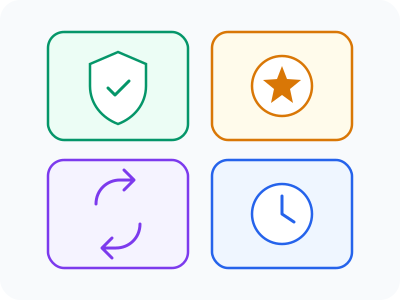
Without risk of falls, burns, cuts or harm to yourself or others.
Completed properly without severe pain, breathlessness or distress.
Able to repeat the task as often as needed across the day without exhaustion.
Taking no more than twice as long as someone without your condition.
Good days do not cancel out your points
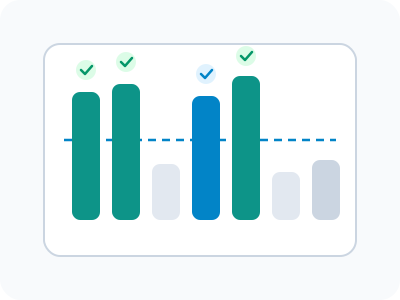
If a difficulty affects you on more than half of days (at least 4 days a week, or 183 days a year), that descriptor applies to your claim.
1. What Activity 10 Measures: Simple vs Complex Budgeting Decisions
Activity 10 is the final Daily Living activity on the PIP2 and AR1 forms. Under Part 2 of Schedule 1 of the PIP Regulations, it tests cognitive and mental decision-making around money, split into two statutory levels:
- Simple budgeting decisions: Calculating the cost of everyday items and working out how much change you should receive when buying basic goods.
- Complex budgeting decisions: Decisions involving:
- Calculating household and personal budgets across a week or month;
- Managing and paying utility bills, rent, or council tax; and
- Planning future purchases and understanding the financial consequences of spending or credit.
(Note: Purely physical barriers, such as not being able to walk to a bank, see a bank statement, or press buttons on a chip-and-PIN pad, are assessed under Activities 12, 8, or 6 rather than Activity 10. Activity 10 focuses on the mental, cognitive, neurodivergent, or psychological process of making financial decisions.)
Assessors sometimes write 'Uses a debit card in shops, therefore 0 points'. Upper Tribunal case law confirms that tapping a contactless card does not prove you can calculate household budgets, prioritise bills, or understand the financial consequences of spending without prompting or assistance under Descriptor 10b (2 points).
2. All 4 PIP Making Budgeting Decisions Descriptors (10a to 10d) & Points
Here are all four statutory descriptors for Activity 10 under Schedule 1 of the PIP Regulations:
| Descriptor | Statutory wording | PIP points |
|---|---|---|
| 10a | Can manage complex budgeting decisions unaided | 0 points |
| 10b | Needs prompting or assistance to be able to make complex budgeting decisions | 2 points |
| 10c | Needs prompting or assistance to be able to make simple budgeting decisions | 4 points |
| 10d | Cannot make any budgeting decisions at all | 6 points |
Descriptor 10b: Prompting or assistance with complex budgeting (2 points)
- Applies if learning disability, ADHD executive dysfunction, autism, bipolar disorder, severe depression, brain fog, stroke, or brain injury means you leave priority bills unopened, lose track of Direct Debits, or overspend rent/bill money impulsively unless a partner, relative, or support worker sits with you to organise your monthly budget, check bills, and prompt payments.
Descriptor 10c: Prompting or assistance with simple budgeting (4 points)
- Applies if dyscalculia, moderate learning disability, brain injury, dementia, or acute cognitive confusion means you cannot work out prices or check whether you were given the right change for everyday items without another person prompting or assisting you, or if you are vulnerable to financial confusion in simple transactions.
Descriptor 10d: Cannot make any budgeting decisions at all (6 points)
- Applies if severe cognitive impairment, advanced dementia, profound learning disability, or severe enduring mental illness leaves you unable to understand the value of money or make any financial decisions even with prompting, so a DWP appointee (Form BF56), court-appointed deputy, or Lasting Power of Attorney holder makes all budgeting decisions on your behalf.
3. How Assessors Test Activity 10 (and the ' £5 Note Change' Question)
During PIP consultations, assessors sometimes ask a quick mental-maths question (such as "If you spend £2.35 out of £5, how much change do you get?") and award 0 points if you answer correctly.
If you struggle with household money in real life, explain why a single mental-maths sum does not satisfy Regulation 4(2A):
- Simple maths is not complex budgeting: Being able to subtract £2.35 from £5 only tests simple arithmetic. It does not test complex budgeting decisions (balancing fluctuating energy bills, rent, food costs, and future expenses across a 4-week month without falling into arrears).
- Executive dysfunction, impulsivity, and distress: In conditions such as ADHD, bipolar disorder, borderline personality disorder, severe depression, or brain injury, knowing basic maths in a calm quiz does not stop executive shutdown (leaving red reminder letters unopened for months) or impulsive spending that leaves no money for electricity or food (safely and to an acceptable standard under Regulation 4(2A)).
- Hidden family safeguards: If your partner or parent holds your savings card, sets spending caps on your bank app, or reviews your account every week because of past debt arrears or financial vulnerability, describe those safeguards clearly.
4. Worked Regulation 4(2A) Example Answers for Activity 10
Use these clear examples to show how your condition affects real-world budgeting:
- Severe depression / ADHD & complex bills (Descriptor 10b - 2 points): "While I can work out basic change in a corner shop, severe depression and ADHD executive dysfunction mean I become overwhelmed by household bills, bank statements, and monthly budgeting. Before my sister stepped in to help, I left council tax and utility letters unopened for four months and received final arrears notices even though funds were in my account, and impulsive spending left me unable to buy food at the end of the month. My sister now reviews my bank account with me every fortnight, calculates my monthly bill budget, and prompts me to pay priority bills on time (Descriptor 10b, 2 points)."
- Moderate learning disability / dementia & simple transactions (Descriptor 10c - 4 points): "Due to vascular dementia, I become confused by coin and note values and cannot work out how much two or three items cost together or check my change in a shop. When buying everyday groceries, my carer prompts me on which notes to hand over and checks the receipt and change so I am not overcharged or left distressed (Descriptor 10c, 4 points)."
MyPIPApp is independent and not part of the DWP. Updating details in MyPIPApp does not set up an appointee with the DWP. To enquire about becoming a DWP appointee (Form BF56) or contact the PIP enquiry line, call 0800 121 4433 (textphone 0800 121 4493).
Free Starter (£0) - one-off stage packs available
Check your estimated PIP points for free
Before you send your paperwork, use our free calculator to check your estimated score across all 12 PIP activities under the four Regulation 4(2A) tests: safely, to an acceptable standard, repeatedly and in a reasonable time.
Frequently asked questions
If all my bills are on Direct Debit, does that mean I score 0 points on Activity 10?
Not if someone else had to set up, monitor, and budget for those Direct Debits because you cannot calculate whether your account has enough money to cover them without going overdrawn or missing essential food costs. Explain who monitors and adjusts your monthly budget.
Does impulsive spending in bipolar disorder or ADHD count under Activity 10?
Yes, if a mental health or neurodivergent condition impairs your judgement and ability to plan future purchases and manage household budgets safely on more than 50% of days (or across recurring episodes under Regulation 7), so you need prompting, spending controls, or assistance from another person under Descriptor 10b (2 points).
Does having a DWP appointee automatically mean 6 points on Activity 10?
Having a DWP appointee (Form BF56) or registered Lasting Power of Attorney for Property and Financial Affairs is strong evidence for Activity 10, though the decision maker still checks why the appointee is needed: if it is because you cannot make any budgeting decisions at all, Descriptor 10d awards 6 points.
Related guides and articles
DWP independence notice: MyPIPApp is an independent self-help tool and is not part of, or endorsed by, the Department for Work and Pensions (DWP) or HMCTS. Actions taken in MyPIPApp update your own claim drafts only and do not notify government systems. To contact the DWP directly about your claim or PA4 report, call 0800 121 4433 (textphone 0800 121 4493).