
PIP Activity 8: Reading and understanding signs, symbols and words (points and examples)

Key points

- Activity 8 tests both seeing standard-sized indoor printed text and cognitively understanding written signs, symbols, dates, and multi-sentence paragraphs.
- Ordinary prescription glasses or contact lenses do not score points (8a), whereas needing a handheld or electronic magnifier, screen reader, text-to-speech app, or coloured dyslexia overlay scores 2 points (Descriptor 8b).
- In Schedule 1, 'prompting' explicitly includes another person explaining written text to you: needing explanation or prompting for multi-sentence text scores 2 points (8c), and needing it for basic signs, symbols, or dates scores 4 points (8d).
- Being unable to read or understand written signs, symbols, or words at all (for example, severe sight loss requiring braille or profound cognitive impairment) scores 8 points (Descriptor 8e).
View visual diagram: The 4 Regulation 4(2A) tests & the 50% rule▼
The 4 reliability tests for every PIP activity
In law, if you cannot do a task safely, to an acceptable standard, repeatedly and in a reasonable time, the DWP must treat you as needing help.
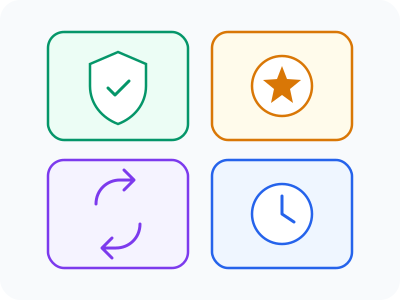
Without risk of falls, burns, cuts or harm to yourself or others.
Completed properly without severe pain, breathlessness or distress.
Able to repeat the task as often as needed across the day without exhaustion.
Taking no more than twice as long as someone without your condition.
Good days do not cancel out your points
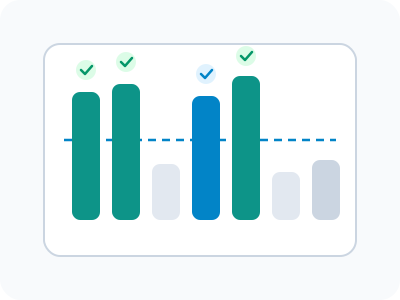
If a difficulty affects you on more than half of days (at least 4 days a week, or 183 days a year), that descriptor applies to your claim.
1. What Activity 8 Measures: Seeing AND Understanding Standard Print
Under Part 2 of Schedule 1 of the PIP Regulations, Activity 8 (Reading and understanding signs, symbols and words) assesses two separate stages of reading indoors in normal lighting while wearing your usual glasses or contact lenses:
- Visual access to standard-sized print: Can you physically see standard-sized printed words, dates, and safety symbols without extra magnification or audio tools?
- Cognitive comprehension: Once you look at the words, can you understand what they mean without another person explaining them to you?
(Note: Activity 8 only tests reading in your native language; needing translation because English is not your first language does not score points under Activity 8 unless a health condition or disability also prevents reading and understanding in your first language.)
Schedule 1 defines 'basic written information' as signs, symbols, and dates written or printed in standard-sized text (such as a 'Fire Exit' sign, a hospital appointment date, or a warning symbol on a bottle). 'Complex written information' means more than one sentence of standard-sized printed text (such as a two-sentence medicine leaflet, hospital letter, or bank letter).
2. All 5 PIP Reading and Understanding Descriptors (8a to 8e) & Points
Below is the complete statutory points table for Activity 8 under Schedule 1 of the PIP Regulations:
| Descriptor | Statutory wording | PIP points |
|---|---|---|
| 8a | Can read and understand basic and complex written information either unaided or using spectacles or contact lenses | 0 points |
| 8b | Needs to use an aid or appliance, other than spectacles or contact lenses, to be able to read or understand either basic or complex written information | 2 points |
| 8c | Needs prompting to be able to read or understand complex written information | 2 points |
| 8d | Needs prompting to be able to read or understand basic written information | 4 points |
| 8e | Cannot read or understand signs, symbols or words at all | 8 points |
Descriptor 8b: Aids other than glasses or contact lenses (2 points)
- Applies if, even with your strongest prescription glasses, you need an optical or digital handheld magnifier, screen magnification / zoom software, screen-reader or text-to-speech camera app, or specialist coloured dyslexia overlays / tinted reading rulers to read standard-sized print.
Descriptors 8c (2 points) and 8d (4 points): Prompting (including explaining)
- Under Schedule 1, prompting means "reminding, encouraging or explaining by another person".
- Descriptor 8c (2 points): You can recognise basic signs and dates, yet learning disability, brain injury, stroke, dementia, severe dyslexia, or severe cognitive impairment means another person must read through and explain any text longer than a single sentence (such as medication instructions, clinic letters, or household notices) so you understand what it means.
- Descriptor 8d (4 points): You need another person to prompt or explain even basic signs, symbols, or dates in standard print.
Descriptor 8e: Cannot read or understand signs, symbols or words at all (8 points)
- Applies if severe visual impairment (for example, being unable to see standard print even with magnifiers, including people who read braille rather than visual print) or profound cognitive disability prevents reading written signs, symbols, or words altogether (8 points qualifies for the Standard Daily Living rate of £76.70/week in 2026/27 on its own).
3. Checking Activity 8 Against Regulation 4(2A)
Before submitting your answer, test your reading ability against Regulation 4(2A):
- Safely: Misreading dosage labels on medicine packets, allergy labels on food, or hazard symbols on household products creates a direct safety risk if you try to read standard print without magnification or someone checking and explaining it.
- To an acceptable standard & repeatedly: If macular degeneration, diabetic retinopathy, nystagmus, optic neuritis, or visual stress causes words to blur or trigger severe migraine after reading two lines, you cannot read complex multi-sentence information repeatedly or to an acceptable standard unaided.
- Within a reasonable time: If severe dyslexia or post-stroke alexia means decoding a short two-sentence paragraph takes more than twice as long as someone without your condition and still leaves the meaning unclear without someone explaining it, point to Descriptors 8b or 8c.
4. Worked Regulation 4(2A) Example Answers for Activity 8
Here are two structured examples connecting clinical evidence to Schedule 1:
- Macular degeneration & magnification aids (Descriptor 8b - 2 points): "Due to wet age-related macular degeneration in both eyes (ophthalmology clinic letter attached), standard prescription glasses do not allow me to read normal 12pt printed text on medicine packets, food labels, or hospital letters. Central distortion blurs letters together, so on every occasion I must use an illuminated 5x handheld magnifier or my tablet's camera text-to-speech reader to read standard print safely under Regulation 4(2A)."
- Acquired brain injury & cognitive explanation (Descriptor 8c - 2 points): "Following a traumatic brain injury, my working memory and written comprehension fail whenever printed text runs beyond one short sentence. While I can read a single date or street sign, reading a two- or three-sentence letter from my GP surgery or energy supplier leaves me confused about what action is required. My partner has to read multi-sentence letters with me and explain them step by step (prompting under Descriptor 8c)."
MyPIPApp is independent and not part of, or endorsed by, the DWP. Saving drafts here updates your private notes only. To request large-print, braille, or audio formats directly from the DWP, call 0800 121 4433 (textphone 0800 121 4493).
Free Starter (£0) - one-off stage packs available
Check your estimated PIP points for free
Before you send your paperwork, use our free calculator to check your estimated score across all 12 PIP activities under the four Regulation 4(2A) tests: safely, to an acceptable standard, repeatedly and in a reasonable time.
Frequently asked questions
Do varifocal or reading glasses score points on Activity 8?
No. Descriptor 8a explicitly excludes standard spectacles and contact lenses. However, if you still need a handheld magnifier, electronic video magnifier, screen reader, or coloured dyslexia overlay in addition to your glasses to read standard print, Descriptor 8b awards 2 points.
If I read braille fluently, do I still score 8 points on Descriptor 8e?
Yes. Under DWP PIP Assessment Guidance (PIPAG Part 2), Activity 8 tests your ability to read standard printed written text visually; braille is not treated as an aid to read visual print, so claimants who cannot read visual signs, symbols, or words due to sight loss satisfy Descriptor 8e (8 points).
Does struggling to fill in the 40-page PIP2 booklet prove Descriptor 8c?
The threshold for 'complex written information' in Schedule 1 is much simpler than a 40-page booklet: it means more than one sentence of standard-sized printed text. Make sure your examples show how you struggle to read or understand everyday two- or three-sentence texts (such as a medicine leaflet, short appointment letter, or household note) without someone explaining them.
Related guides and articles
DWP independence notice: MyPIPApp is an independent self-help tool and is not part of, or endorsed by, the Department for Work and Pensions (DWP) or HMCTS. Actions taken in MyPIPApp update your own claim drafts only and do not notify government systems. To contact the DWP directly about your claim or PA4 report, call 0800 121 4433 (textphone 0800 121 4493).