
PIP Activity 7: Communicating verbally (hearing, speech and support points)
Key points
- Activity 7 tests your physical, sensory, and neurological ability to express (speak) and understand (hear) spoken information in your native language.
- Wearing prescription hearing aids, a cochlear implant, or using a voice amplifier / speech aid scores 2 points (Descriptor 7b).
- Needing communication support (such as BSL interpretation, lipreading / rephrasing by an experienced supporter, or aphasia support) scores 4 points for complex spoken sentences (7c) or 8 points for basic spoken sentences (7d).
- Under Regulation 4(2A), hearing spoken words in a silent clinic room is not the full test if everyday background noise prevents you hearing and understanding speech reliably even with hearing aids.
View visual diagram: The 4 Regulation 4(2A) tests & the 50% rule▼
The 4 reliability tests for every PIP activity
In law, if you cannot do a task safely, to an acceptable standard, repeatedly and in a reasonable time, the DWP must treat you as needing help.
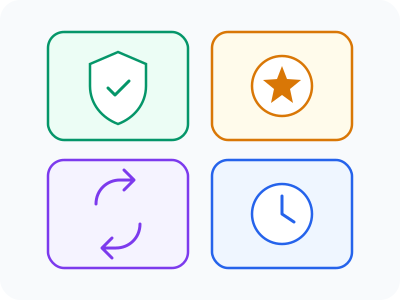
Without risk of falls, burns, cuts or harm to yourself or others.
Completed properly without severe pain, breathlessness or distress.
Able to repeat the task as often as needed across the day without exhaustion.
Taking no more than twice as long as someone without your condition.
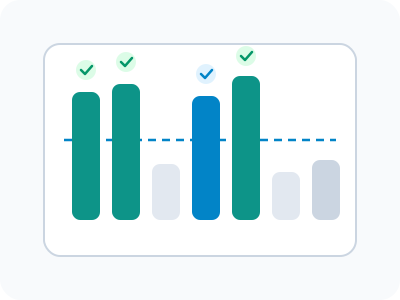
Good days do not cancel out your points
If a difficulty affects you on more than half of days (at least 4 days a week, or 183 days a year), that descriptor applies to your claim.
1. What Activity 7 Measures (and How It Differs from Activity 9)
Under Part 2 of Schedule 1 of the PIP Regulations, Activity 7 (Communicating verbally) tests two sides of spoken communication:
- Expressing verbal information: Physically forming clear, intelligible spoken words and sentences (affected by stroke / aphasia, dysarthria, Parkinson's speech volume, laryngectomy, severe stammer, cerebral palsy, or neurological conditions).
- Understanding verbal information: Hearing and processing spoken words (affected by deafness, bilateral or unilateral hearing loss with background noise distortion, tinnitus, auditory processing disorder, brain injury, or dementia).
Activity 7 vs Activity 9: Put anxiety in the right place
- If you have normal physical hearing and speech mechanics, and your barrier is social anxiety, panic attacks, selective mutism from anxiety, or autistic social distress around strangers, the DWP assesses that under Activity 9 (Engaging with other people face to face) rather than Activity 7.
- If you have both a hearing/speech/language processing condition (Activity 7) and social distress (Activity 9), explain each barrier under its matching activity.
Schedule 1 defines 'basic verbal information' as a simple spoken sentence (for example, 'Would you like a cup of tea?' or 'I need help'). 'Complex verbal information' means either more than one spoken sentence, or one complicated sentence (such as multi-step instructions from a doctor or pharmacist).
2. All 5 PIP Communicating Verbally Descriptors (7a to 7e) & Points
Here are all five statutory descriptors for Activity 7 under Schedule 1 of the PIP Regulations:
| Descriptor | Statutory wording | PIP points |
|---|---|---|
| 7a | Can express and understand verbal information unaided | 0 points |
| 7b | Needs to use an aid or appliance to be able to speak or hear | 2 points |
| 7c | Needs communication support to be able to express or understand complex verbal information | 4 points |
| 7d | Needs communication support to be able to express or understand basic verbal information | 8 points |
| 7e | Cannot express or understand verbal information at all even with communication support | 12 points |
Descriptor 7b: Aids or appliances to speak or hear (2 points)
- Applies if you wear hearing aids (NHS or private), a cochlear implant, a bone-anchored hearing aid (BAHA), an electrolarynx / voice amplifier, or use an augmentative and alternative communication (AAC) speech tablet / text-to-voice app on more than 50% of days.
Descriptors 7c (4 points) and 7d (8 points): Communication support
- In Schedule 1, communication support means support from a person trained or experienced in communicating with people with specific communication needs (for example, a British Sign Language interpreter, a lipspeaker, or a family member / carer experienced in lipreading support, repeating and simplifying speech when hearing aids distort sound, or interpreting dysarthric / aphasic speech).
- Descriptor 7c (4 points): You can follow a short, simple spoken sentence face to face, yet need communication support to express or understand multi-sentence or complex spoken information.
- Descriptor 7d (8 points): Even for a single simple spoken sentence, you need communication support (8 points qualifies for the Standard Daily Living rate of £76.70/week in 2026/27 on its own).
Descriptor 7e: Cannot express or understand verbal information at all (12 points)
- Profound bilateral deafness without functional BSL/lipreading access, or severe neurological/cognitive impairment (such as global aphasia or advanced dementia) prevents expressing or understanding even basic verbal information with support (12 points qualifies for the Enhanced Daily Living rate of £114.60/week on its own).
3. Hearing Aids, Lipreading & Real-World Background Noise Under Regulation 4(2A)
A common error in PA4 reports is awarding only 2 points (7b) to someone with severe hearing loss because "Claimant wore bilateral hearing aids and heard questions during the consultation".
Under Regulation 4(2A) and Upper Tribunal case law, verbal communication must work to an acceptable standard in normal everyday indoor environments, not only in a completely silent room one-to-one:
- Background noise distortion: Hearing aids amplify background sounds (shop tills, clinic waiting rooms, television, traffic, multiple voices) alongside speech. If you still miss multi-sentence spoken information even while wearing your hearing aids unless a family member faces you clearly for lipreading and repeats sentences slowly, explain why Descriptor 7c (4 points) applies.
- Lipreading is not an 'unaided' cure: If you cannot follow spoken sentences on the telephone or when someone turns their head, wears a mask, or stands in poor light, state how heavily you depend on lipreading and communication support.
- Speech fatigue and reasonable time: If Parkinson's hypophonia, post-stroke aphasia, or severe vocal cord weakness means your speech fades to a whisper after a few minutes or takes more than twice as long to find and pronounce words, point to Regulation 4(2A) repeatability and reasonable time.
4. Worked Regulation 4(2A) Example Answers for Activity 7
Here are two clear examples linking clinical evidence with Regulation 4(2A):
- Bilateral hearing aids & complex speech support (Descriptor 7c - 4 points): "I have moderate-to-severe bilateral sensorineural hearing loss and tinnitus (audiology clinic audiogram attached) and wear NHS digital hearing aids every day. While I can catch a single short sentence in a quiet room face to face, my hearing aids amplify background hum in GP waiting rooms, pharmacies, or family rooms so spoken words blur together. For any multi-sentence conversation, my partner must come with me to face me directly so I can lipread and rephrase complex spoken instructions into short chunks. Under Regulation 4(2A), I cannot understand complex verbal information to an acceptable standard without this experienced communication support."
- Post-stroke expressive aphasia (Descriptor 7d - 8 points): "Following a left-hemisphere stroke, expressive and receptive aphasia means I struggle to understand spoken sentences at normal speed and cannot find or pronounce basic words when speaking. Even for simple everyday requests at home or with clinicians, my carer (who knows my speech patterns and gesture cues) must interpret what is being asked and help express my answers safely and within a reasonable time."
MyPIPApp is an independent self-help tool and is not part of the DWP. Saving drafts here updates your private notes only. To contact the DWP PIP enquiry line, call 0800 121 4433, textphone 0800 121 4493, or Relay UK on 18001 then 0800 121 4433.
Free Starter (£0) - one-off stage packs available
Check your estimated PIP points for free
Before you send your paperwork, use our free calculator to check your estimated score across all 12 PIP activities under the four Regulation 4(2A) tests: safely, to an acceptable standard, repeatedly and in a reasonable time.
Frequently asked questions
Do I automatically score 2 points on Activity 7 if I wear prescription hearing aids?
Yes, if you reasonably need to wear hearing aids on more than 50% of days to hear spoken information, Descriptor 7b awards 2 points. Attaching your NHS audiology report or hearing aid repair book record is strong supporting evidence.
Can a family member count as 'communication support' under Descriptors 7c (4 pts) or 7d (8 pts)?
Yes. Under Schedule 1, communication support means someone trained or experienced in communicating with people with specific communication needs. A partner, parent, or carer who is experienced in rephrasing speech for lipreading, signing, or interpreting dysarthric or aphasic speech can qualify.
Does needing Relay UK or textphone on phone calls count under Activity 7?
Activity 7 mainly assesses face-to-face spoken communication in everyday settings, though needing Relay UK (18001 0800 121 4433) or captions on calls helps confirm that your hearing aids alone do not restore normal speech comprehension without visual lipreading or communication support.
Related guides and articles
DWP independence notice: MyPIPApp is an independent self-help tool and is not part of, or endorsed by, the Department for Work and Pensions (DWP) or HMCTS. Actions taken in MyPIPApp update your own claim drafts only and do not notify government systems. To contact the DWP directly about your claim or PA4 report, call 0800 121 4433 (textphone 0800 121 4493).